Hidden Hazards? The 19,000 Forgotten Landfills Beneath England’s Postcodes
Hidden Hazards? The 19,000 Forgotten Landfills Beneath England’s Postcodes
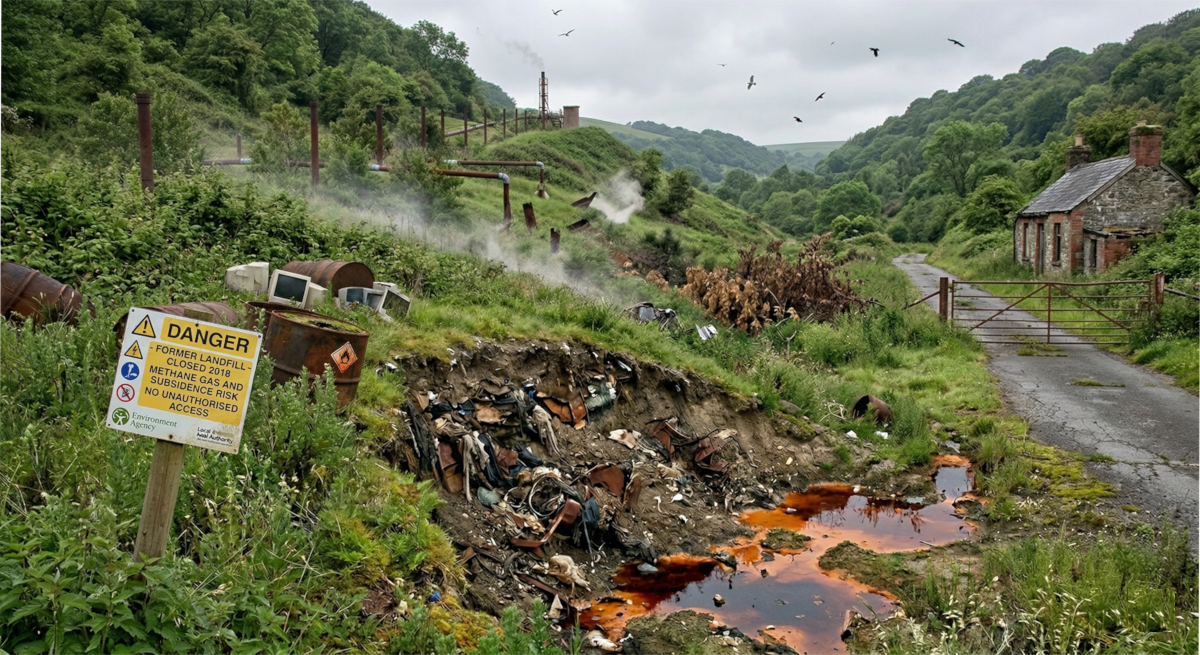
When we think of the English countryside, we picture rolling hills and pristine parks. But beneath thousands of those “green” spaces lies a massive, invisible legacy of our industrial past: historical landfill sites.
While we have a clear view of the waste we create today, our understanding of what was buried decades ago is surprisingly murky.
The Scale of the “Hidden” Problem
To understand the scale, we have to look at the numbers. Today, waste management is a highly regulated, high-tech industry. In fact, there are only about 260 active landfill sites currently operating in England under strict modern rules.
The real story, however, is in the past. There are over 19,500 historical (closed) sites scattered across the country. To put that in perspective, for every one active site we can see today, there are roughly 75 forgotten ones hiding in the landscape.
A Chaotic Mix of Waste
Because many of these sites were filled before modern record-keeping existed, we are often “guessing” what’s inside. Based on the records we do have, the variety is staggering:
-
The “Everyday” Legacy: Around 5,400 sites are filled with household waste from previous generations.
-
The Industrial Footprint: There are roughly 12,000 sites dedicated to commercial and industrial waste—byproducts of a booming mid-century economy.
-
The “Sludge” Factor: Nearly 1,700 sites were used specifically for liquid sludges, which behave very differently underground than solid rubbish.
Why “Closed” Doesn’t Mean “Safe”
The most worrying part isn’t just that the waste is there—it’s that it doesn’t always stay put. Without the high-tech liners and capture systems used today, these older sites can “leak” into the surrounding environment:
-
Escaping Gases: Over 1,100 sites are known to have gas byproducts escaping into the atmosphere.
-
Toxic Seepage: More than 300 sites have “Leachate”—a toxic, soupy liquid created when rainwater filters through waste—seeping directly into the ground.
The Information Gap: A Cause for Concern
Perhaps the most unsettling fact is how little we actually know. Many of these 19,500 sites date back to an era where record-keeping was scant or non-existent. In many cases, we know a site exists, but we don’t know exactly where its boundaries end, how deep it goes, or the specific cocktail of chemicals buried inside. As we build new homes and face more frequent flooding due to climate change, these “forgotten” sites are beginning to demand our attention.
At Know Your Area, we believe you have a right to know what’s under your postcode. Don’t rely on a “gut feeling”—check the data.
Sources:
- Historic Landfill Sites: Environment Agency – Historic Landfill Dataset. This dataset identifies the location and boundaries of thousands of sites where permits are no longer in force.
- Active Landfill Monitoring: Environment Agency – Permitted Waste Sites. This covers the currently active sites under modern regulation.
- Waste Statistics: DEFRA – UK Statistics on Waste. This provides the broader context of how much waste is being processed across England.