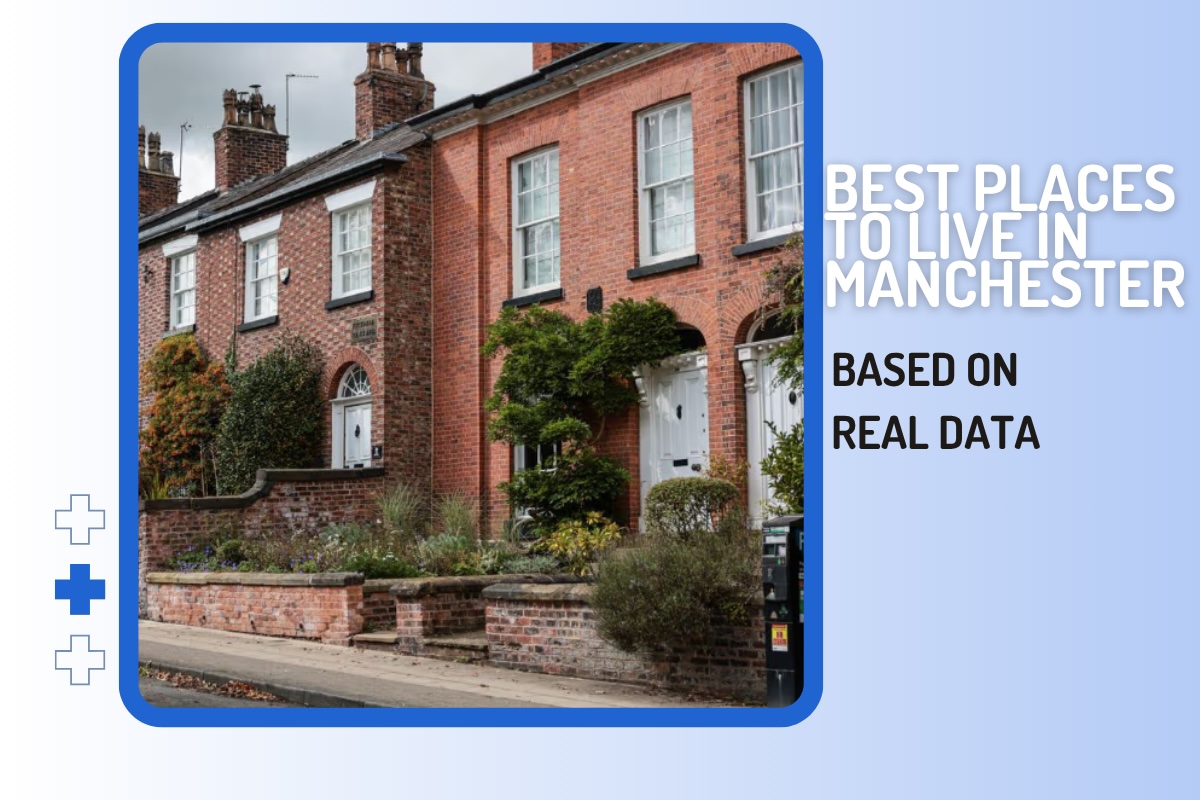
Best Places to Live in Manchester: A Data-Led Guide to Choosing the Right Area
Manchester is one of the UK’s most dynamic cities – but like any large city, the experience of living there can vary dramatically depending on the area you choose.
Some neighbourhoods offer strong connectivity and access to work. Others may perform better in terms of safety, affordability or general living conditions.
The challenge is that these differences aren’t always obvious.
In this guide, we take a data-led look at Manchester – using available indicators such as crime, connectivity and local conditions to help you understand how areas compare.
This isn’t about creating a definitive ranking. It’s about helping you ask better questions – and make a more informed decision about where to live.
Why “best place to live” is subjective
When people search for the “best places to live” in a city, what they’re often really looking for is the best place for them.
That depends on individual priorities.
For some, proximity to the city centre and transport links will be key.
For others, safety, affordability or quieter residential environments may matter more.
Two areas can perform very differently depending on:
- lifestyle
- budget
- work location
- family needs
That’s why broad rankings can be misleading.
A more useful approach is to understand how areas differ – and then decide which factors matter most to you.
Key factors that shape an area
While every location is different, there are a few consistent factors that tend to shape how an area performs.
Safety
Crime levels vary across Manchester, often influenced by factors such as population density, footfall and proximity to commercial centres.
Areas closer to the city centre or major transport hubs may experience higher levels of certain types of crime, while more residential areas can sometimes show lower levels of reported incidents.
Safety is rarely uniform – and it’s best assessed at a neighbourhood or postcode level.
Connectivity
Manchester benefits from strong transport links, including rail, tram and road networks.
However, connectivity can vary significantly between areas.
Some neighbourhoods offer:
- quick access to central Manchester
- strong public transport connections
- reliable broadband and digital infrastructure
Others may be more limited, particularly further from main routes or hubs.
For many people, especially commuters or remote workers, this can be a defining factor.
Affordability
Property prices across Manchester can vary widely depending on location.
Areas closer to the city centre or with strong transport links often command higher prices, while more peripheral areas may offer better affordability.
Affordability is not just about price – it’s also about value:
- what you get for your budget
- how the area is changing over time
- whether demand is increasing
Understanding these differences can help you identify areas that align with your budget and expectations.
Living conditions
Broader indicators – such as deprivation levels and general local conditions – can also provide useful context.
These factors can influence:
- access to services
- overall environment
- long-term area development
Again, these are not definitive measures, but they help build a more complete picture of how areas differ.
How Manchester varies by area
Manchester is not a uniform city – it’s a collection of neighbourhoods with distinct characteristics.
In general terms:
- central areas tend to offer strong connectivity and access to work, but can come with higher density and activity levels
- inner suburban areas often provide a balance between access and residential feel
- outer areas and surrounding towns may offer more space and affordability, but with different trade-offs in terms of connectivity
Even within relatively small distances, there can be noticeable variation.
That’s why it’s important to avoid broad assumptions and instead focus on specific locations.
Example areas (context, not ranking)
To illustrate how areas can differ, it’s useful to look at a few examples – not as recommendations, but as context.
Some areas may be known for:
- strong transport connections
- proximity to employment hubs
- more residential environments
- relative affordability
Others may differ across:
- crime patterns
- connectivity
- housing stock
- general local conditions
The key takeaway is that no single area is universally “best” – each comes with its own mix of strengths and trade-offs.
How to compare areas yourself
The most effective way to choose where to live is to look at the data directly.
On KnowYourArea, you can explore any Manchester postcode and see:
- crime patterns
- connectivity and infrastructure
- environmental indicators
- broader local context
This allows you to compare areas on a consistent basis, rather than relying on opinion or assumptions.
Final thought
Choosing where to live in Manchester isn’t about finding a universally “best” area.
It’s about understanding how different neighbourhoods perform – and deciding which factors matter most to you.
By looking at the data, you can move beyond general impressions and make a more informed, confident decision.